
Counterfeiters are increasingly moving beyond traditional websites and marketplaces.
Social platforms can be used to promote products, communicate with customers, redirect buyers and build communities around potentially unauthorised or counterfeit goods. eCounterfeit Alliance investigates these environments to identify suspicious activity and potential connections between social accounts, sellers, websites and other digital assets.
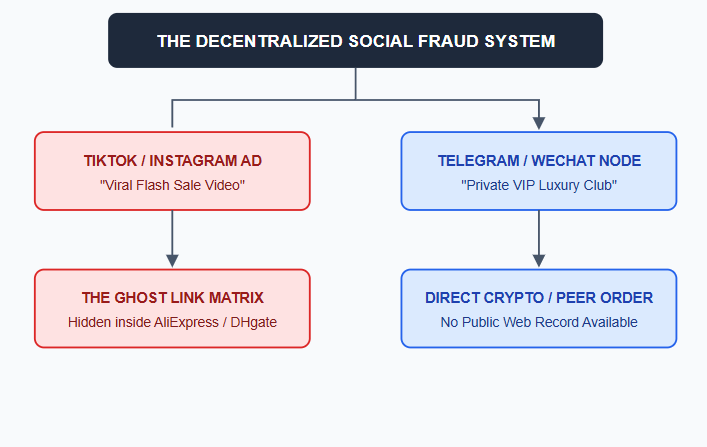
As detailed above, modern counterfeiters deploy highly decentralised marketing tactics to exploit these ecosystems. They do not maintain large, permanent digital storefronts. Instead, they leverage the viral algorithms of social platforms to launch short-lived video advertisements, influencer shoutouts, and algorithmic keyword spamming.
By the time a corporate legal team notices a viral post selling fake goods, the account has already been deleted, the profits have been extracted, and the syndicate has moved on to a fresh profile. Social Commerce Defence is specifically engineered to counter this agility, providing brands with the specialised automated eyes required to monitor, track, and police these highly elusive environments in real time.
Deconstructing the “Ghost Listing” and Hidden Link Phenomenon
One of the most complex challenges in modern e-commerce marketplace surveillance is the rise of the “Ghost Listing” or “Hidden Link” methodology. This tactic is widely used across major global platforms to completely bypass automated platform brand filters. Counterfeit syndicates do not list products using your actual brand name or trademarked logos. Doing so would trigger the platform’s internal automated copyright protection algorithms.
Instead, the bad actor creates a completely benign listing for a generic, unbranded item—for example, a simple white T-shirt or a generic plastic phone case. This listing is perfectly compliant with the platform’s terms of service and passes all automated inspections. However, the counterfeiter then promotes a “Hidden Link” across social media channels or specialised Discord servers. They instruct buyers: “If you want the counterfeit luxury watch, buy the white t-shirt from this specific link. Our warehouse knows to ship the fake watch instead of the T-shirt.”
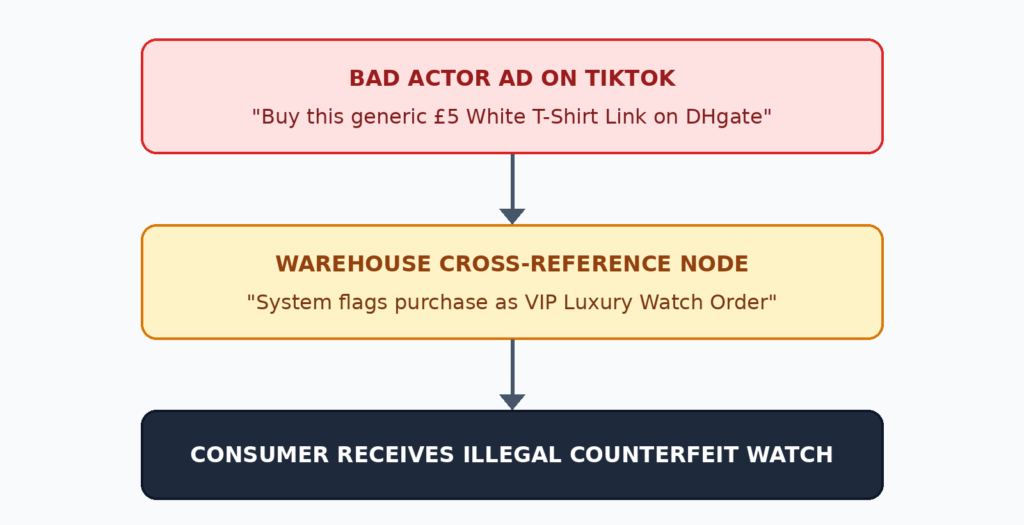
Our Social Commerce Defence system systematically breaks down this obfuscation. By deploying advanced multimodal AI models, our software continuously crawls the external social media networks, forums, and chat groups where these hidden link codes are shared.
The AI extracts the contextual text, decodes the hidden purchase matrices, and automatically links the public social media promotion directly to the seemingly innocent marketplace listing. Once this connection is mapped, a comprehensive, legally binding platform escalation report is automatically generated, forcing the marketplace operator to remove the listing and freeze the merchant’s escrow balance before the transaction can be finalised.